Ask ten Sri Lankans in Colombo what Pada Yathra is, and you will likely get a few blank stares. Ask someone from Batticaloa or Trincomalee, and they might describe a relative who walked it. That gap says a lot about the country. One of Sri Lanka's oldest living traditions, older than Buddhism, older than Hinduism as it is practiced here, older than the temple it ends at, has been happening quietly along the east coast every year for generations, and much of the island barely knows it exists.
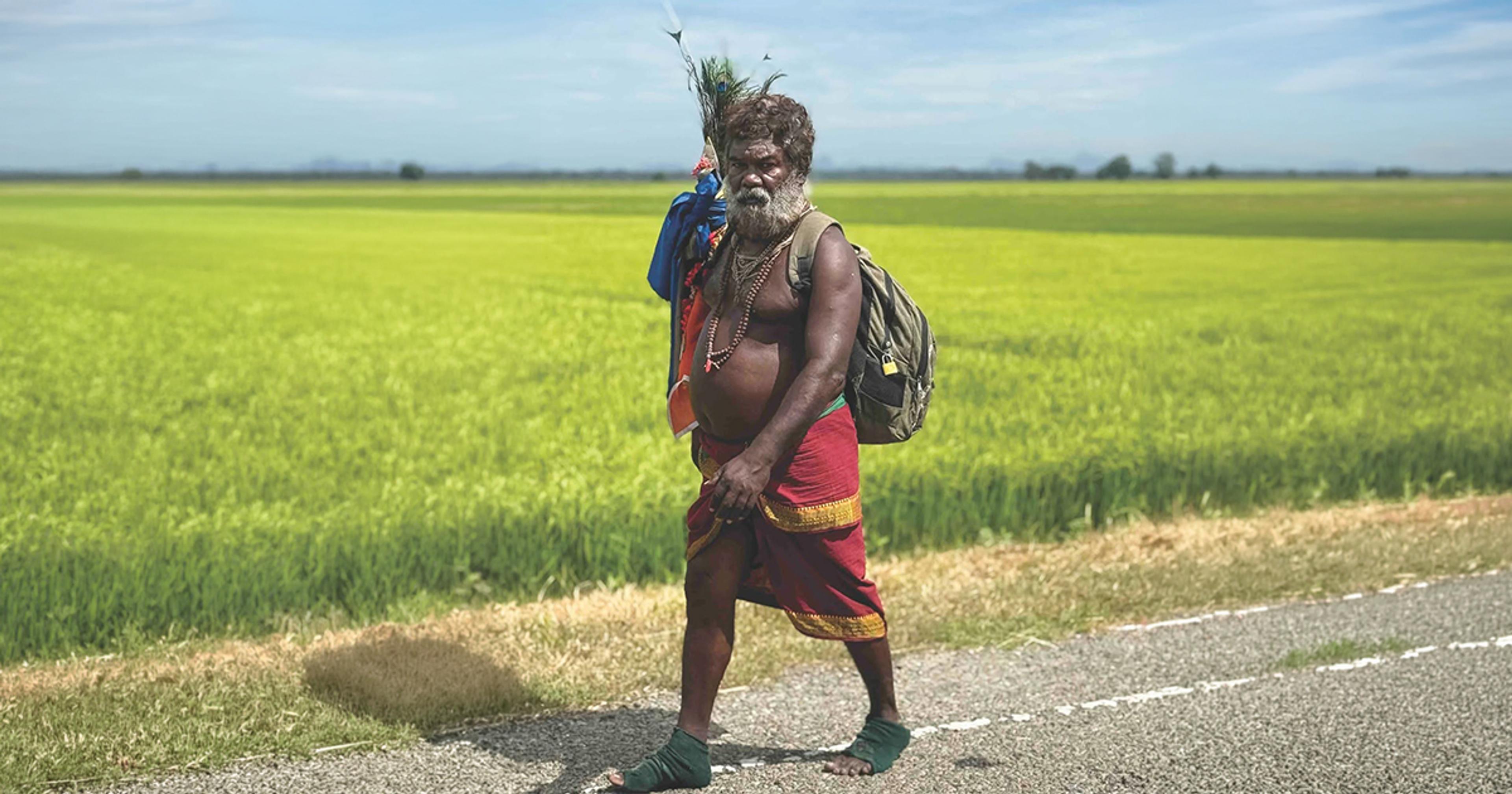
Pada Yathra (also spelled Pada Yatra, meaning "journey by foot") is a pilgrimage that carries devotees on foot from the Jaffna peninsula in the north down the entire east coast of Sri Lanka, through the wilderness of Kumana and Yala National Parks, to the shrine town of Kataragama in the deep south. Depending on where a pilgrim starts, the walk takes anywhere from a few days to close to two months, covering a route that runs nearly 400 kilometres from Jaffna, with government accounts describing the full northern route as more than 500 kilometres of difficult terrain.
It is not a protest march, and it is not a staged cultural event for tourists. It is, at its core, an act of devotion re-enacting a legend that predates every major religion currently practiced on the island.
What Pada Yathra Actually Is
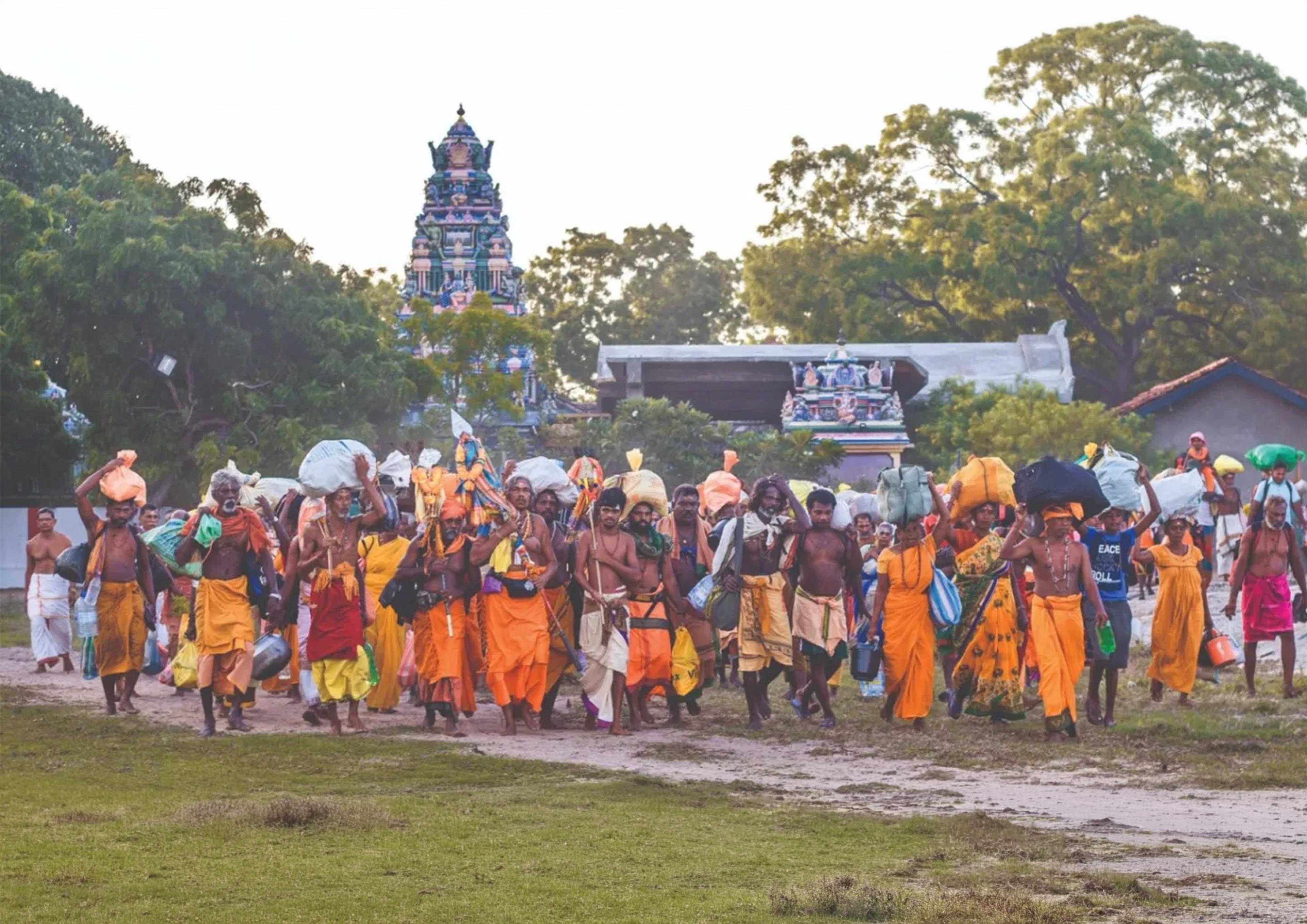
Every June and July, as the Esala festival season approaches at the Ruhunu Kataragama Maha Devalaya, thousands of pilgrims converge on the shrine dedicated to the god known across communities as Skanda, Murugan, Kataragama Deviyo, or Kande Yaka. Most are Tamil Hindus from the north and east, but the walk has long included Sinhala Buddhists, Muslim sufis, Christian clergy, and members of Sri Lanka's indigenous Vedda community, all converging on the same jungle shrine for reasons rooted in their own faith.
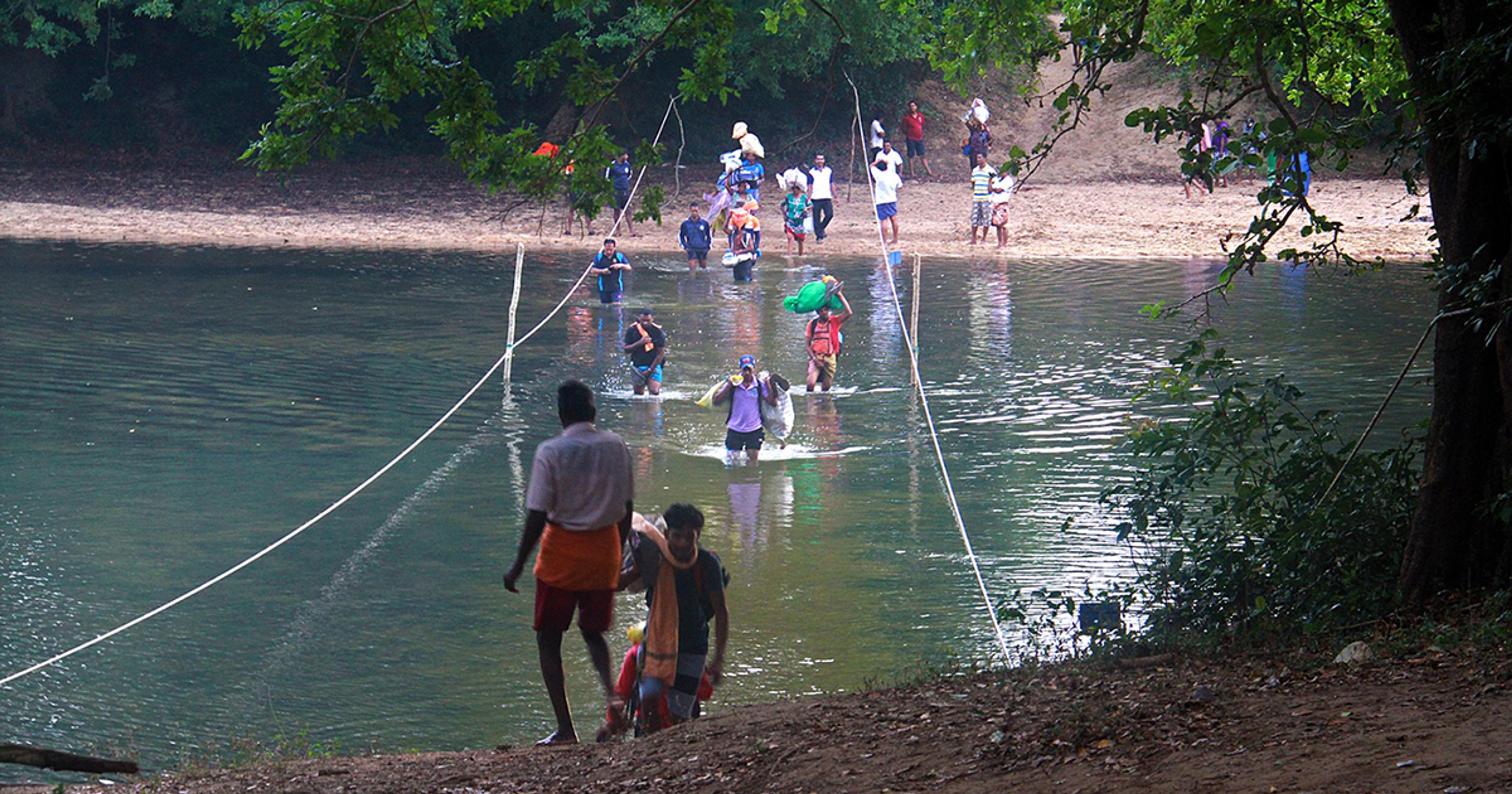
Traditionally, pilgrims set out from points across the Jaffna peninsula and the eastern coast, moving through some 73 temples along the way, resting at each one, where villagers offer food, water, and a place to sleep. The route hugs the coastline down through Batticaloa and Ampara, before turning inland at Pottuvil and cutting through roughly 90 kilometres of dense forest inside Kumana and Yala National Parks, according to the Kataragama Devotees Trust, the organisation most closely associated with keeping the tradition alive.
Today, the majority of participants no longer walk the full route from Jaffna. Most join at the Okanda entrance to Kumana, where the final stretch to Kataragama can be completed in five to six days rather than two months. It is a shorter, still demanding version of the same walk, and it is the one most visitors and newer local participants encounter.
A Legend Older Than the Temple
The story behind Pada Yathra is, in a way, the story of Kataragama itself.
According to the legend, Valli was born from the union of a hermit sage and a doe, discovered as an infant nestled in the wild yam creepers of the forest, which is where her name, Valli Amma, meaning "child of the wild creepers," comes from. A Vedda chieftain found and raised her. Years later, when the god Skanda, who had left his celestial home on Mount Kailasa after a dispute with his first consort, heard of a forest maiden of extraordinary grace, he came looking for her. Their union at Kataragama is what the pilgrimage re-enacts every year, according to accounts documented by Explore Sri Lanka magazine.
What makes this more than a nice myth is who tells it. According to scholars Heinz Bechert and Paul Younger, cited on the Wikipedia entry for Kataragama Temple, the rituals connected to the shrine are widely understood to survive from indigenous Vedda modes of worship that existed before Buddhist and Indo-Aryan cultural influence arrived in Sri Lanka. The Sinhalese priests, or kapuralas, who preside over the shrine today openly acknowledge that their tradition descends from the island's original forest-dwelling people, the Wanniya-laeto, according to the Kataragama Devotees Trust's own historical account. Local Veddas still believe the nearby peak of Vaedihitti Kanda, "the Mountain of the Veddas," is where the deity resides.
In other words, before there was a temple, before there were four religions laying claim to the same sacred ground, there was a forest path, and people walking it.
A Pilgrimage That Outlasted a War
Pada Yathra's more recent history is where the story gets genuinely remarkable, and it is the part almost never covered in the usual festival listicles.
Before 1950, there was no motorable road to Kataragama at all. Walking, or travelling by bullock cart, was simply how anyone reached the shrine, according to the Devotees Trust's introduction to the pilgrimage. Long before that, in the sixteenth century, Portuguese colonial authorities went so far as to seal off the ancient pilgrimage route from the Asian mainland, wary of the steady flow of Hindu swamis and Muslim holy men passing through Jaffna toward the south.
The tradition nearly died in 1983. That year's ethnic riots brought a sudden and violent halt to a walk that had continued more or less uninterrupted for generations. It took until 1988 for it to be revived, when a veteran pilgrim named Vel Swami, then 72 years old, made the call for devotees to return to the trail, backed by the newly formed Kataragama Devotees Trust, according to the Trust's own account of that period.
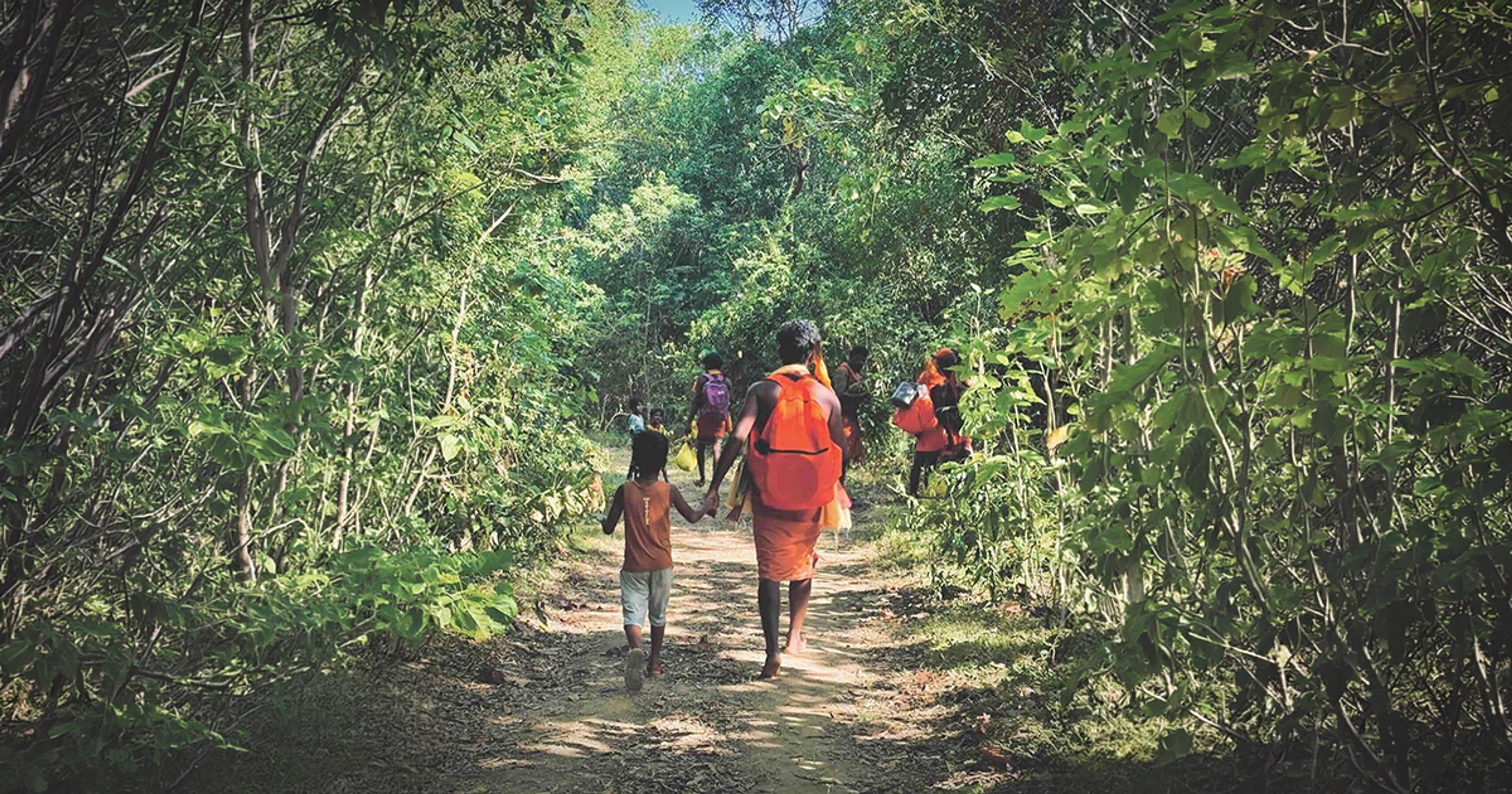
Then came 1990. Hundreds of devotees set out from Mullaitivu on June 11 that year to begin the 45-day walk south, only for full-scale civil war to break out on that exact same day. Most were forced to turn back before reaching Kataragama. And yet, through nearly three decades of conflict that followed, with active military zones cutting across parts of the route, the pilgrimage never fully stopped. Pilgrims kept walking, aided by the Trust and by communities along the way, through years when very little else moved freely between Sri Lanka's north and south, as detailed in a 2025 feature by Groundviews.
Since the war ended in 2009, participation has climbed steadily and, in the last two years, dramatically.
Pada Yathra in 2026: What's Actually Changing
This is where the story shifts from history to something closer to a live debate, and it's worth reporting honestly rather than glossing over.
In 2024, more than 31,000 pilgrims completed the 20-day walk through Kumana and Yala, a record at the time. In 2025, that number was matched within the first seven days alone, with the Kumana park warden telling Mongabay that more than 10,000 people entered the park on the opening day, calling it the most attended Pada Yathra in recent memory. For 2026, the clearest available guidance points to the walk beginning around mid-May, with the culminating Kataragama Perahera falling in mid-July, according to Explore Sri Lanka's most recent coverage, though exact gate-opening dates for Kumana and the Devalaya's flag-hoisting ceremony are typically confirmed only a few weeks ahead of the festival each year.
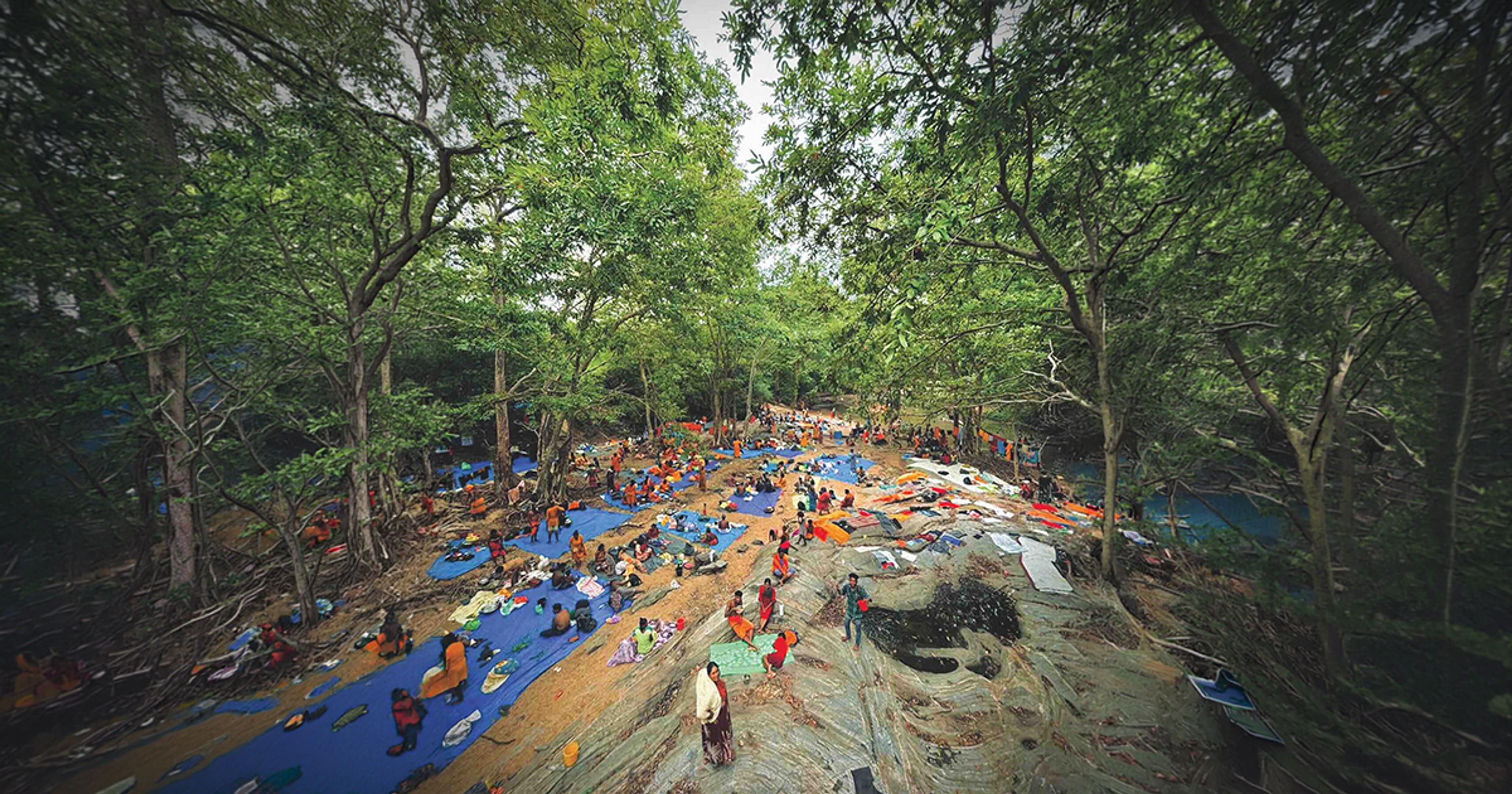
That growth has not been uncomplicated. Because pilgrims are permitted to cross Kumana and Yala without the entry fees or guide requirements ordinary visitors need, the walk has increasingly attracted people who are not on a religious journey at all: adventure hikers, photographers, and even tour operators marketing multi-day "camping experiences" along parts of the route. Conservationists interviewed by The Morning have raised concerns about unsupervised groups roaming protected forest blocks, waste building up along the trail, and wildlife being disturbed by vehicle traffic and lights at night, echoing problems already seen at Adam's Peak. It is a tension worth understanding rather than ignoring: the very openness that makes Pada Yathra so accessible is also what is straining it.
Walking Through Leopard Country
None of this is a gentle countryside stroll. The final stretch runs directly through two of Sri Lanka's most important wildlife reserves, and the risks are real, not decorative.
Kumana and Yala hold some of the healthiest leopard populations on the island, and in 2012, a Pada Yathra pilgrim was killed in a leopard attack, a sobering fact reported by Mongabay. Wildlife authorities routinely advise pilgrims to travel in groups and stay especially alert near waterholes, which draw elephants, leopards, sloth bears, and crocodiles, particularly at dawn and dusk. The Sri Lankan Army maintains water points along the route, though some stretches leave up to ten kilometres between refill points, and there are no toilets once the jungle section begins, according to a detailed trail guide from Chase the Wonders, one of the few first-hand accounts written for people considering the walk.
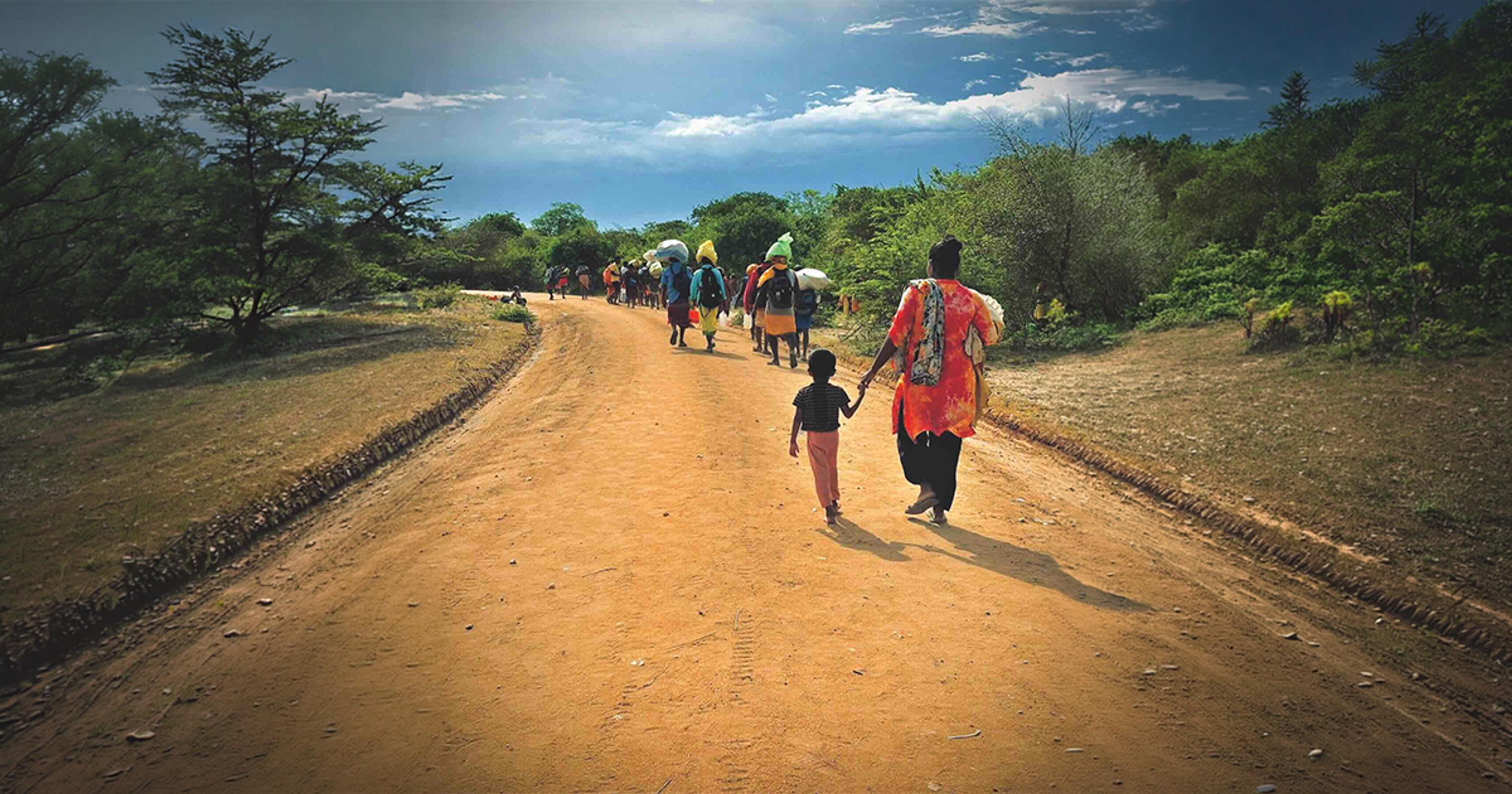
Heat is the other constant danger. Long, shadeless stretches through open plains, combined with limited water in certain sections, mean dehydration and heat exhaustion are common complaints, far more common than any animal encounter.
Can You Join? A Respectful Traveler's Guide
Pada Yathra is not closed to outsiders, and that is part of what makes it such a rare experience, but it does come with expectations worth taking seriously.
If you want to walk it: Most newcomers, local or foreign, join at Okanda rather than attempting the full route from Jaffna. The trail guide's advice, echoed across most first-hand accounts, is to join an established "nade" (a pilgrim group) rather than walking alone, and to ask the group's leader for permission first. This remains, first and foremost, a Hindu religious observance, so alcohol and smoking are not tolerated on the trail, and modest dress and respectful conduct around rituals go a long way.
If you just want to witness it: You do not need to walk the jungle stretch to experience Pada Yathra. Watching the first pilgrim groups arrive at Kataragama, particularly in the days before the Devalaya's flag-hoisting ceremony that opens the Esala festival, is itself a moving and completely accessible experience, and one far more manageable for travelers with limited time.
Timing matters. The festival period draws enormous crowds to Kataragama town itself, and accommodation books out well in advance. If your goal is to see the pilgrims arrive and take in the Esala Perahera processions and fire-walking rituals that follow, plan your Sri Lanka trip around the confirmed festival dates once the Devalaya announces them, typically in early June.
Why This Story Matters, Even If You're Not Religious
Strip away the ritual, and what is left is one of the more striking pieces of evidence for how Sri Lanka actually holds together. A tradition inherited from the island's first people, kept alive through colonial suppression, a near-collapse in 1983, and outright war, still draws Tamil Hindus, Sinhala Buddhists, and Muslims to the same forest shrine every single year, walking the same paths their grandparents' grandparents walked. That it remains largely unknown outside the communities who practice it is, honestly, a bit of a loss for the rest of the country.
If Yala and Kumana's wilderness, and the culture woven through it, is calling to you, our team can help you experience this part of Sri Lanka properly, with licensed guides who know the parks and respect the pilgrimage that passes through them. Get in touch at book@rapidadventures.lk or browse our Sri Lanka experiences to start planning.
Further Reading and Sources
- Kataragama Devotees Trust: Pada Yatra history and background
- Kataragama.org: Pada Yatra pilgrimage archive
- Mongabay (July 2025): Ancient eco-friendly pilgrimage brings modern threats to Sri Lanka wilderness
- Groundviews (July 2025): Pada Yatra, at the Crossroads Between Spirituality, Conservation and Tourism
- The Morning (August 2024): The Pada Yatra's perilous path
- Wikipedia: Kataragama Temple
- Explore Sri Lanka: Kataragama Pada Yatra, A Pilgrimage Through Time and Faith